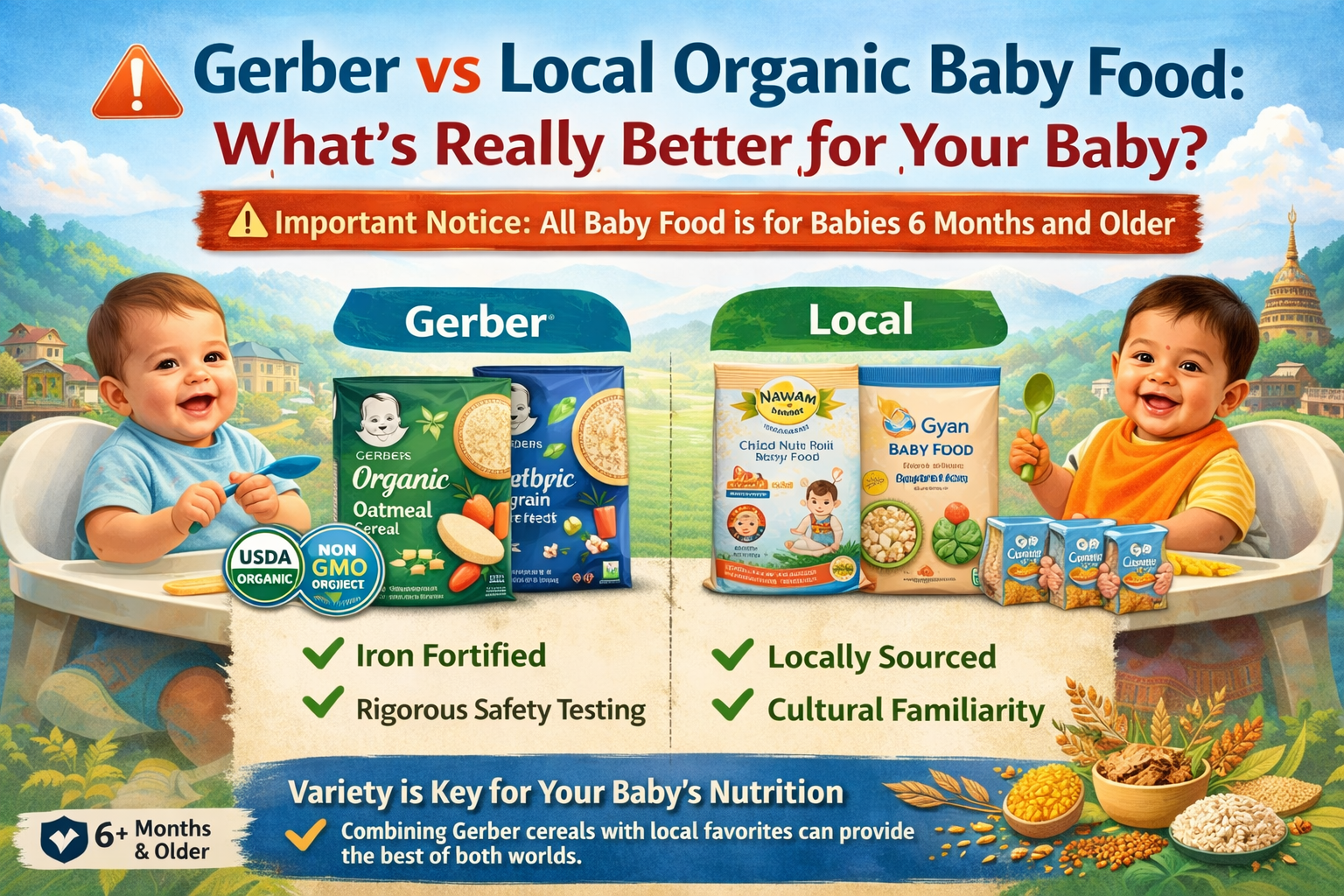
Gerber or local organic? We give you an honest comparison of nutrition, safety standards, price, and taste for Nepali parents — so you can choose with confidence. Remember: nothing before 6 months; breast milk always comes first.
⚠️ Important Notice: All Baby Food is for Babies 6 Months and OlderNepal's Mother's Milk Substitutes (Control of Sale and Distribution) Act, 2049 (1992) mandates exclusive breastfeeding for the first 6 months of life. Whether you choose international brands like Gerber or local options, no solid food should be given before 6 months. Mother's milk is the only food your newborn needs. Luna Bites exclusively sells products for babies aged 6 months and older, in full compliance with Nepali law and WHO guidelines.Walk into any conversation among Nepali parents about baby food and you'll quickly encounter two camps: those who swear by Gerber and international certified brands, and those who prefer locally made organic options like Nawam, Gyan Lito, or homemade lito.Both sides have valid points. This guide isn't here to declare a winner — it's here to give you the honest comparison you need to make the right choice for your family. And the starting point for all of them is the same: nothing before 6 months.Understanding the Two CategoriesInternational certified brands (Gerber): Manufactured in facilities that undergo rigorous third-party safety audits. They carry certifications like USDA Organic and Non-GMO Project Verified, and are tested against hundreds of contaminants. Designed to meet the specific nutritional needs of infants at each developmental stage from 6 months onwards.Local and traditional options (Nawam, Gyan Lito, Mamu Chori, homemade lito): Draw from generations of Nepali weaning wisdom. They use familiar, locally-sourced ingredients like ragi, sattu, rice, lentils, and nuts. Culturally resonant, widely available, and significantly more affordable.Nutrition ComparisonIron Content: This is where international brands have a clear edge. Gerber cereals are iron-fortified, providing 45–90% of a baby's Daily Value of iron per serving. Iron is critical for brain development and is naturally lower in breast milk after 6 months. Most local Nepali baby foods are not fortified with iron — babies who eat primarily local cereal may need additional sources like pureed dal.Protein and Calories: Local options like lito and sattu, made from grains and legumes, provide good protein and calorie density. Gerber products are designed to complement breast milk or formula, so they're intentionally moderate in caloric density.Whole Ingredients: Here, local options genuinely shine. Nawam Lito and homemade sattu are made from recognizable whole ingredients — ragi, rice, chickpea, dried fruit — without processing aids or emulsifiers.Safety and Contaminant TestingGerber products are subject to the U.S. FDA's stringent baby food safety guidelines and are tested for heavy metals (lead, arsenic, cadmium, mercury), pesticide residues, and microbiological contamination. Products carrying the USDA Organic seal are grown without synthetic pesticides and are verified by accredited certifiers.Local Nepali brands, while made with genuine intent and often natural ingredients, generally do not publish third-party contaminant testing results. This doesn't mean they're unsafe — it means the level of verifiable transparency is lower.Taste and Cultural FamiliarityBabies develop flavor preferences early, and there's real value in introducing them to the flavors of their culture. Local foods like ragi lito, banana porridge, and sattu reflect the cuisine your child will grow up eating. Gerber's range complements local weaning — products like Gerber Puffs and Gerber Multigrain Cereal introduce new tastes in safe, age-appropriate ways.Price ComparisonLocal options win here decisively. Nawam Child Nutri Food costs around NPR 547 for a large pack, while Gerber cereals at Luna Bites are priced at NPR 1,900–2,200. For families managing budgets carefully, local options provide excellent nutritional value at a lower cost. However, Gerber's price reflects its certification overhead, global supply chain safety standards, and the R&D that goes into pediatric nutrition formulation.The Honest Verdict: Combine BothThere's no universal winner. The best approach for most Nepali families is a combination strategy:✅ Use Gerber Organic Single Grain Oatmeal Cereal (available at Luna Bites) as a primary early cereal from 6 months — for its guaranteed iron fortification and contaminant testing.✅ Complement with local options like homemade dal-rice, mashed banana, and traditional khichdi to introduce cultural flavors and whole-ingredient nutrition.✅ As your baby moves to table foods, traditional Nepali cuisine — dal bhat, vegetable tarkari, khichdi — becomes an excellent staple.Questions Parents Often AskIs Gerber safe for Nepali babies? Yes. Gerber products are USDA Organic certified and tested for over 500 contaminants. They are suitable for babies of all ethnicities from 6 months of age and have been safely consumed by millions of babies globally.Is homemade lito better than packaged cereal? Homemade lito made with clean, quality ingredients is a wonderful, nutritious option. The main gap compared to packaged cereal is iron fortification. Consider adding iron-rich foods like pureed lentils alongside homemade preparations.Can I give my baby both local and international baby food? Absolutely. Variety in early feeding supports diverse taste acceptance and provides a broader nutritional base. This is often the best approach.Luna Bites is your trusted partner for internationally certified Gerber products in Nepal. Shop our full range here — we ensure authenticity and fast delivery so your baby gets the real thing, every time.